
Seacoast Spine & Sports Injuries Clinic

Find the pattern behind what hurts.

143 plain-language guides

Start with a body area, a symptom, or the name you were given. This library covers common musculoskeletal conditions, sports injuries, pain patterns, and recovery questions without asking you to diagnose yourself.

A guide, not a self-diagnosis

You can begin with the language you already have.

Pain location alone cannot confirm a diagnosis. Shoulder pain can begin in the shoulder or the neck. Heel pain can involve fascia, tendon, bone, nerve, or load. These pages help you recognize useful clues, understand what an examination should answer, and spot changes that belong in urgent medical care.

Search symptoms too

Terms such as tingling, clicking, instability, morning stiffness, and running pain are indexed alongside condition names.

Two New Hampshire clinics

Assessment and care are available in Portsmouth on the Seacoast and Alton in the Lakes Region.

Search every condition, symptom, injury, and recovery guide.

Filter by body region or type what you feel. Every result opens a dedicated guide with signs, contributors, assessment priorities, care options, urgent warnings, and related topics.

143 guides
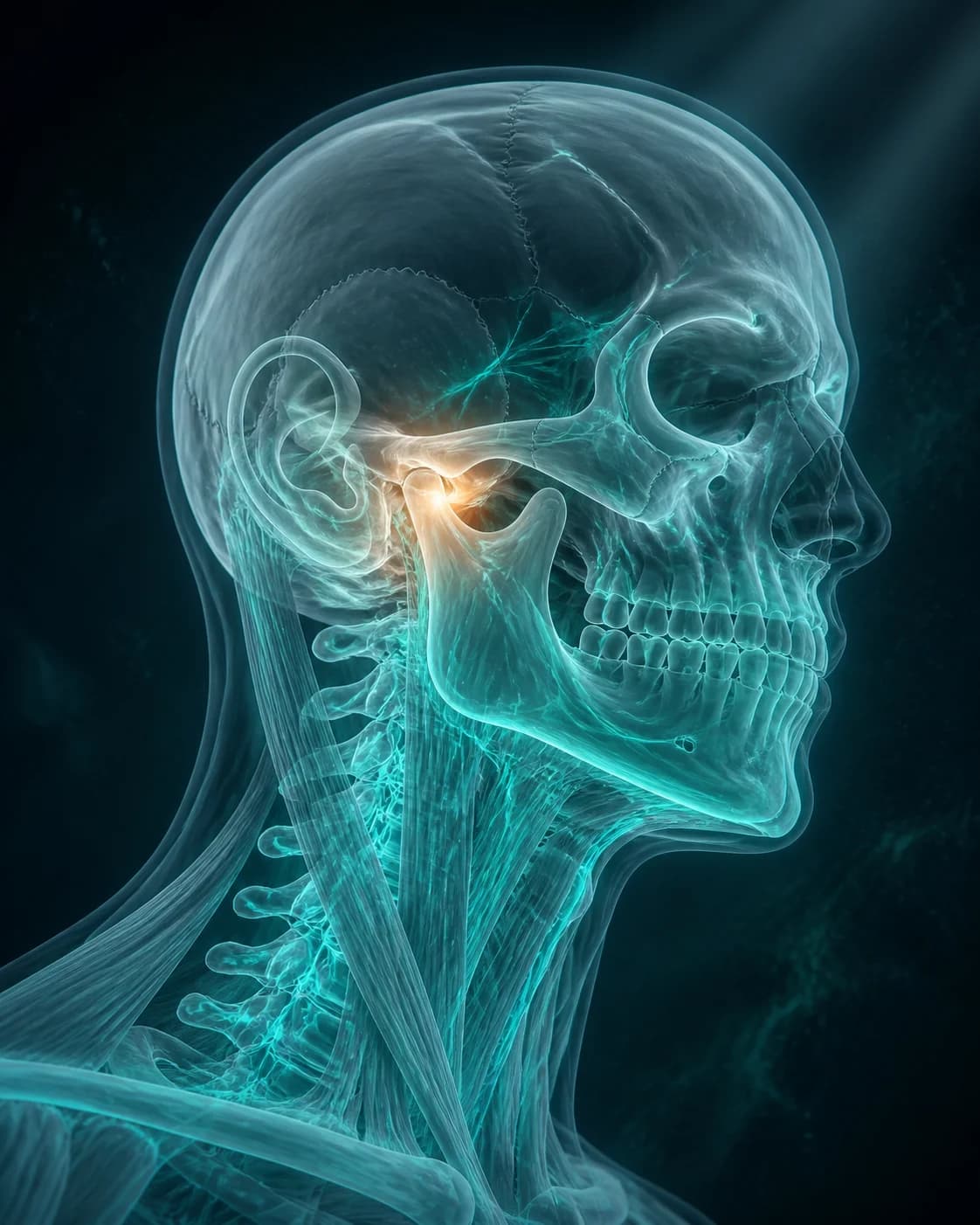
Translucent anatomical illustration of the skull, jaw joint, and upper neck

Head, headache & jaw

8 guides

Headache patterns, jaw pain, concussion symptoms, and impact-related complaints.
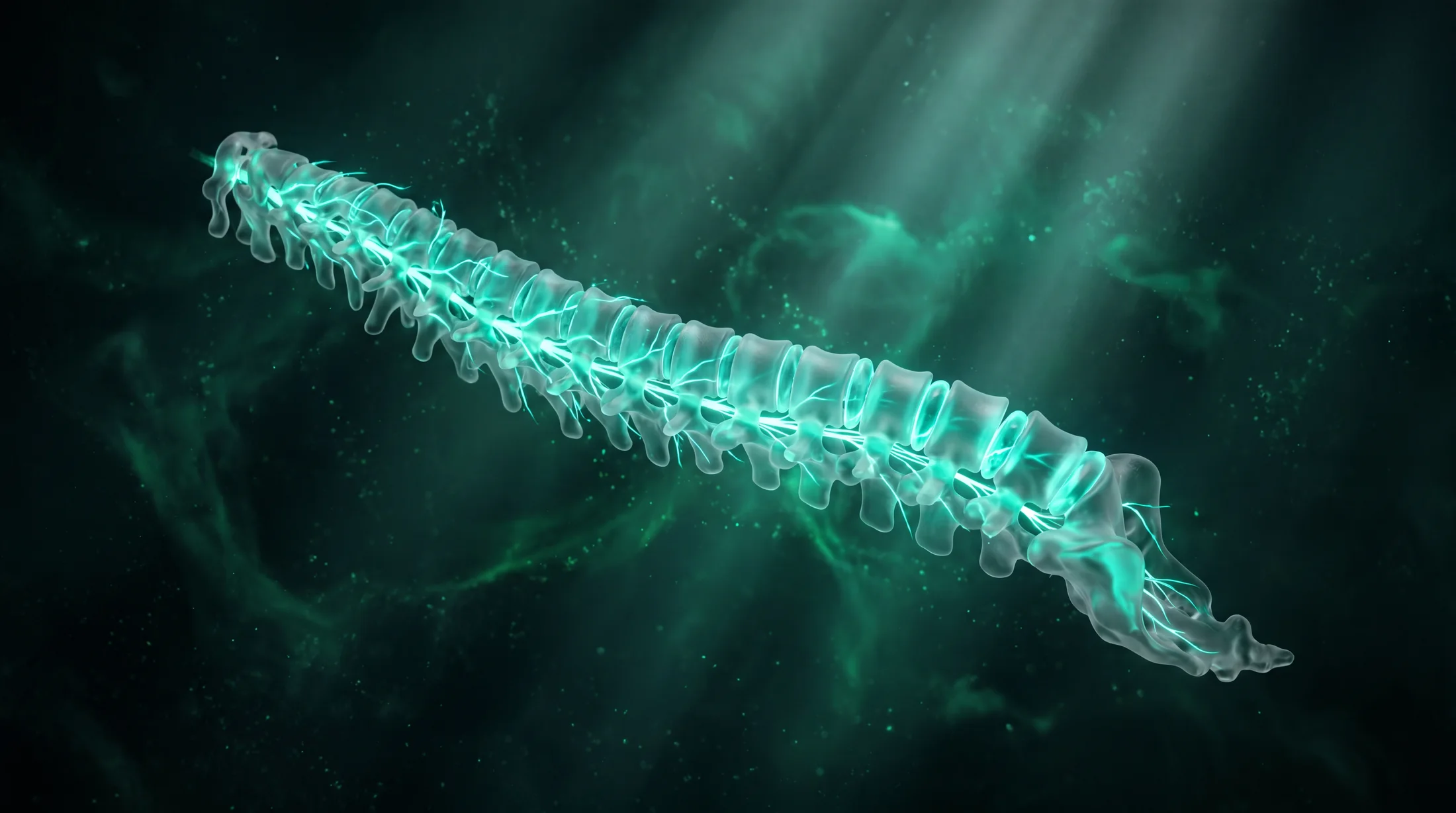
Translucent anatomical illustration of the cervical spine and spinal nerves

Neck & cervical spine

10 guides

Neck pain, limited motion, disc and joint complaints, and symptoms that travel into an arm.
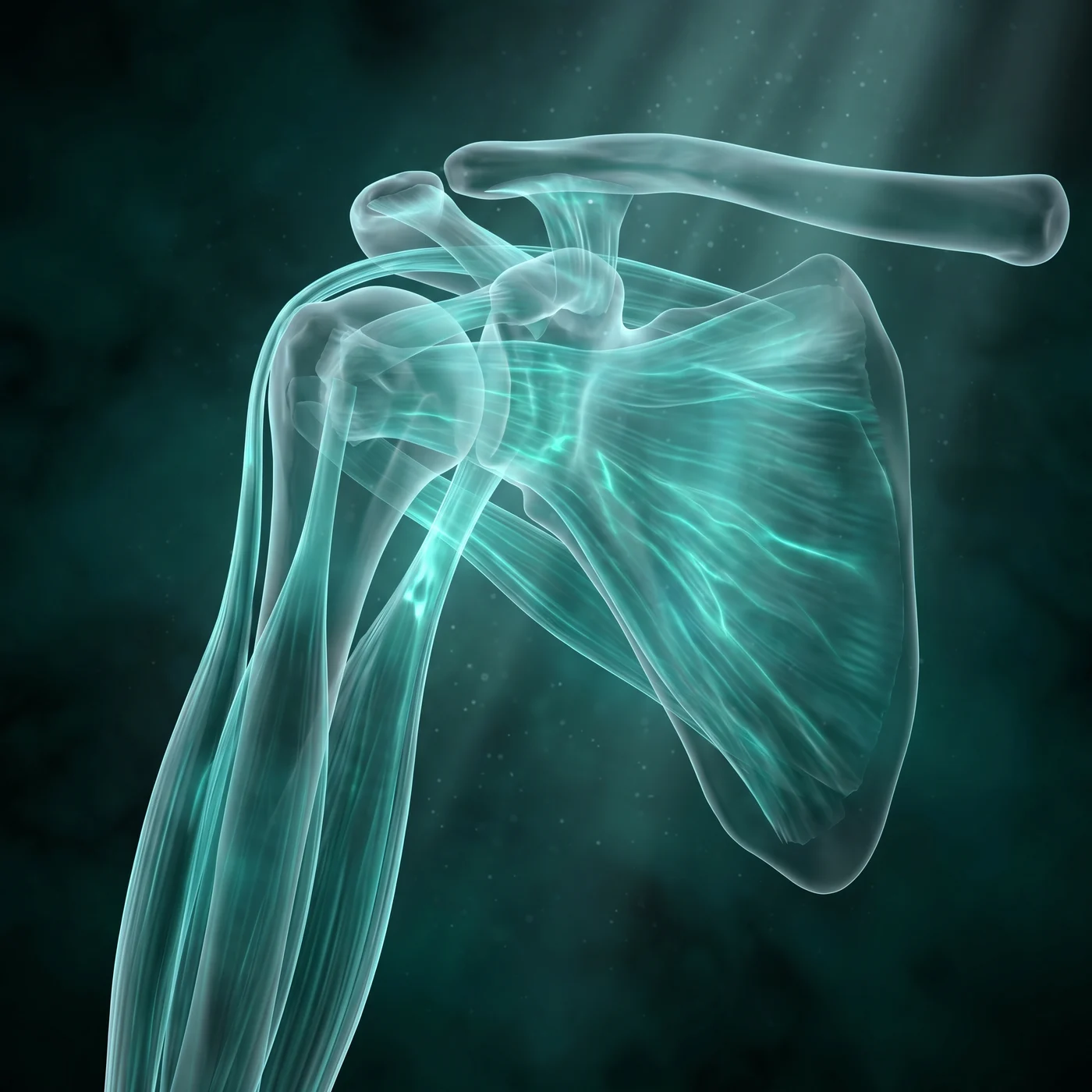
Translucent anatomical illustration of the shoulder joint and rotator cuff

Shoulder & shoulder blade

13 guides

Overhead pain, weakness, instability, tendon injury, and shoulder-blade mechanics.
Shoulder PainShoulder pain can arise from the rotator cuff, bursa, joint, labrum, neck, or the way the shoulder blade and upper arm share load.Rotator Cuff InjuriesThe rotator cuff is a group of four muscles and tendons that center and rotate the shoulder.Rotator Cuff TendinopathyRotator cuff tendinopathy is load-related pain in one or more shoulder tendons.Rotator Cuff Tear RehabilitationRehabilitation for a rotator cuff tear may be nonsurgical or follow repair.Shoulder Impingement SymptomsShoulder impingement describes pain as tendons or bursal tissue become sensitive during arm elevation.Shoulder BursitisShoulder bursitis is irritation of a fluid-filled sac that helps tissues glide under the acromion.Frozen ShoulderFrozen shoulder, or adhesive capsulitis, causes progressive pain and loss of both active and passive shoulder motion.Shoulder Labral InjuryThe shoulder labrum is a rim of cartilage that deepens the socket and supports stability.Shoulder InstabilityShoulder instability occurs when the upper-arm bone moves excessively in the socket or feels likely to slip.Shoulder Dislocation RehabilitationA shoulder dislocation requires prompt reduction and medical assessment.AC Joint SprainAn acromioclavicular joint sprain affects the ligaments at the top of the shoulder, usually after a fall directly onto the shoulder.Proximal Biceps TendinitisThe long head of the biceps tendon can become painful at the front of the shoulder.Scapular DyskinesisScapular dyskinesis describes altered shoulder-blade movement or position, not a diagnosis by itself.
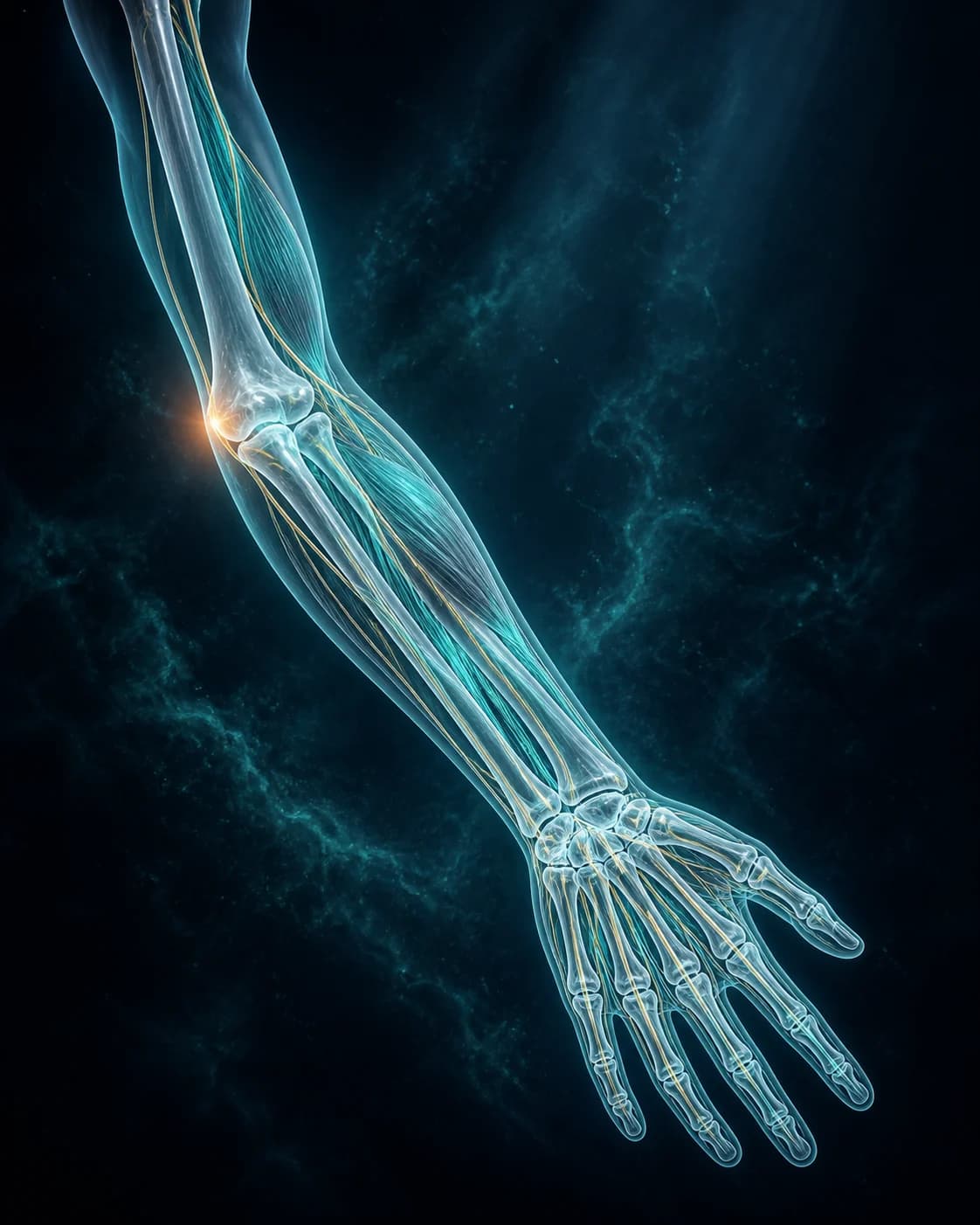
Translucent anatomical illustration of the elbow and forearm

Elbow & forearm

9 guides

Throwing injuries, tendon overload, nerve irritation, and forearm strain.

Translucent anatomical illustration of the wrist, hand, tendons, and nerves

Wrist, hand & thumb

10 guides

Grip weakness, tingling, tendon irritation, sprains, and return of hand function.

Translucent anatomical illustration of the spine and spinal nerves

Upper back, mid-back & ribs

8 guides

Thoracic stiffness, rib pain, postural overload, and pain around the shoulder blades.

Translucent anatomical illustration of the lumbar spine and sacrum

Low back, pelvis & core

15 guides

Low-back pain, sciatica, disc and joint complaints, pelvic pain, and core injury.
Back PainBack pain can involve the lumbar joints, discs, muscles, nerves, hips, or a non-musculoskeletal source.Low Back PainLow back pain is a symptom with many possible sources, not a single diagnosis.Lumbar Strain & SprainA lumbar strain affects muscle or tendon, while a sprain affects ligament.Lumbar Herniated DiscA lumbar herniated disc is displacement of disc material that may irritate a nearby nerve.Lumbar Degenerative Disc DiseaseLumbar degenerative disc disease describes age-related disc changes associated with back pain in some people.SciaticaSciatica describes pain along the sciatic nerve pathway, usually from a lumbar nerve-root problem.Lumbar Spinal StenosisLumbar spinal stenosis is narrowing around nerves in the low back.Lumbar Facet Joint PainLumbar facet joints can become sensitive with compression, rotation, or sustained extension.Spondylolysis & SpondylolisthesisSpondylolysis is a stress injury in part of a vertebra, while spondylolisthesis is forward slippage of one vertebra.Sacroiliac Joint DysfunctionSacroiliac joint pain sits near the dimple area where the pelvis meets the sacrum.Tailbone PainTailbone pain, or coccydynia, is pain around the coccyx that often worsens with sitting, rising, or direct pressure.ScoliosisScoliosis is a three-dimensional spinal curve that may be identified during growth or adulthood.Pelvic PainPelvic pain may involve joints, muscles, nerves, pelvic organs, or the pelvic floor.Athletic PubalgiaAthletic pubalgia is activity-related pain at the lower abdomen or groin involving the core muscle and adductor complex.Diastasis RectiDiastasis recti is widening and reduced tension through the connective tissue between the abdominal muscles.
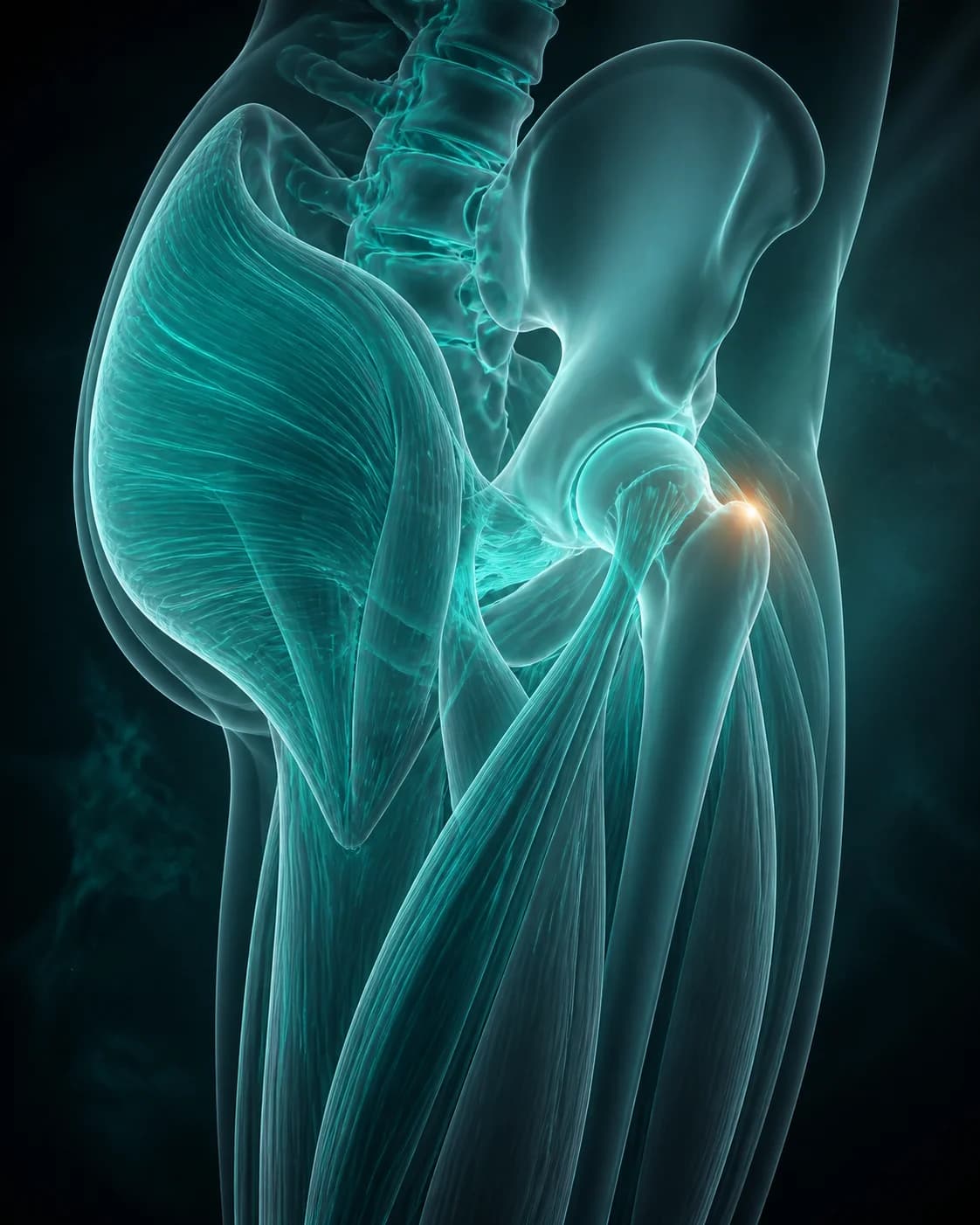
Translucent anatomical illustration of the pelvis, hip joint, and thigh muscles

Hip, groin & thigh

14 guides

Hip-joint pain, tendon overload, muscle strains, and nerve-related thigh symptoms.
Hip PainHip pain may come from the joint, labrum, tendons, bursa, muscles, lumbar spine, or nerves.Hip ImpingementFemoroacetabular impingement describes contact between the hip ball and socket during certain ranges.Hip Labral TearThe hip labrum is a rim of cartilage around the socket.Hip OsteoarthritisHip osteoarthritis is cartilage and joint change that may cause groin pain, stiffness, and loss of walking tolerance.Greater Trochanteric Pain SyndromeGreater trochanteric pain syndrome causes pain at the outside of the hip and often involves gluteal tendons, with or without bursal irritation.Gluteal TendinopathyGluteal tendinopathy is load-related pain in tendons at the outside of the hip.Piriformis SyndromePiriformis syndrome is a debated label for buttock pain and possible sciatic-nerve irritation near the deep hip rotators.Snapping Hip SyndromeSnapping hip is an audible or palpable snap as a tendon moves over bone at the front or side of the hip.Hip Flexor StrainA hip-flexor strain affects muscle or tendon at the front of the hip, often during sprinting, kicking, or sudden acceleration.Groin StrainA groin strain injures one or more adductor muscles on the inner thigh.Hamstring StrainA hamstring strain is a muscle injury at the back of the thigh, usually during sprinting, rapid acceleration, or forced lengthening.Proximal Hamstring TendinopathyProximal hamstring tendinopathy causes pain near the sitting bone where the hamstring tendon begins.Quadriceps StrainA quadriceps strain affects the front-thigh muscles during sprinting, kicking, jumping, or sudden deceleration.Meralgia ParestheticaMeralgia paresthetica is irritation of the lateral femoral cutaneous nerve, causing numbness, burning, or tingling along the outer thigh without true leg-muscle weakness.
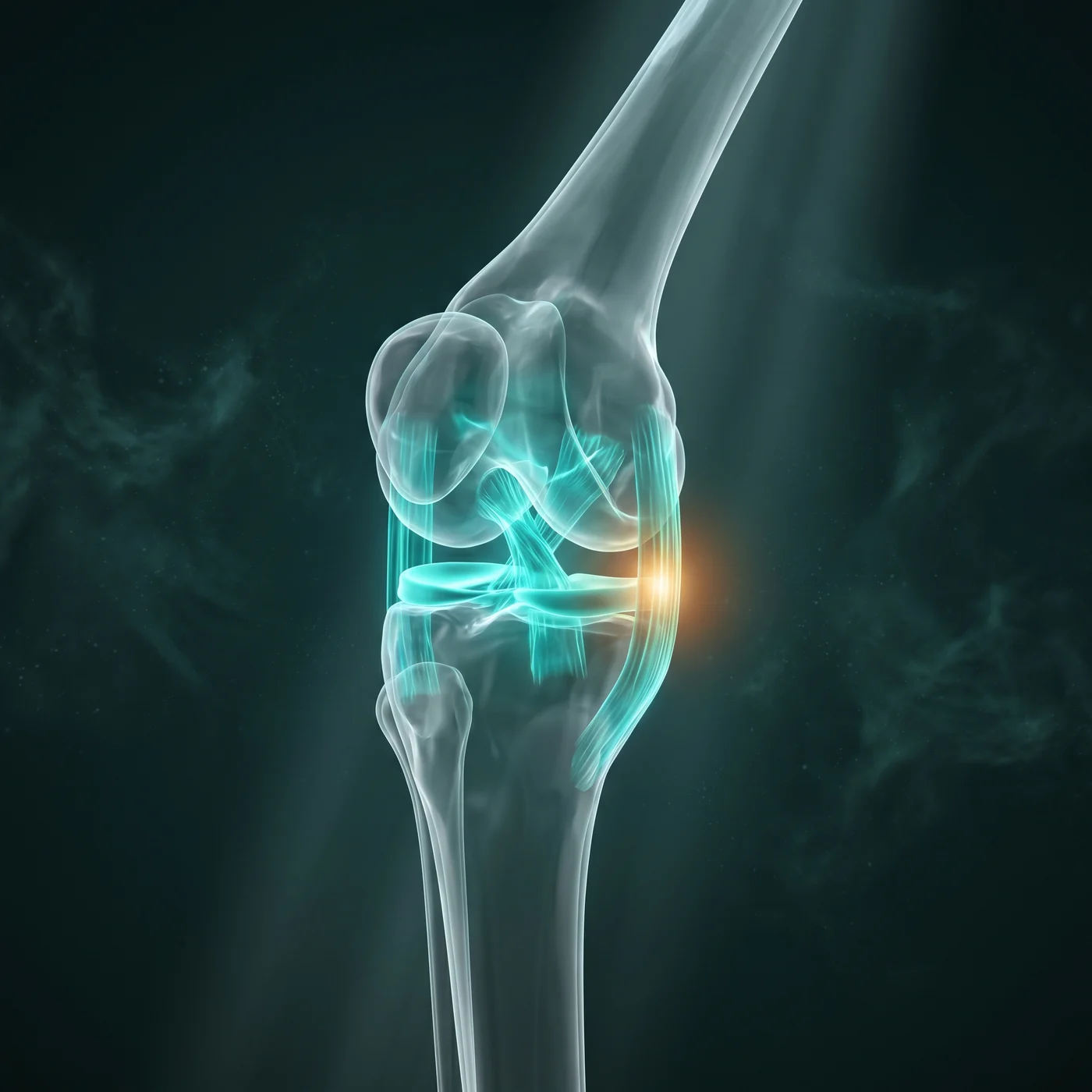
Translucent anatomical illustration of the knee joint, ligaments, and tendons

Knee

17 guides

Ligament and meniscus injuries, kneecap pain, tendon load, arthritis, and surgical rehab.
Knee PainKnee pain can involve the kneecap, meniscus, ligaments, tendons, joint surfaces, or referred symptoms from the hip and back.Patellofemoral PainPatellofemoral pain is discomfort around or behind the kneecap during squats, stairs, running, jumping, or prolonged sitting.Patellar TendinopathyPatellar tendinopathy is load-related pain in the tendon below the kneecap.ACL Injury RehabilitationThe anterior cruciate ligament helps control forward and rotational knee motion.MCL SprainA medial collateral ligament sprain affects the ligament on the inner knee, often after a force from the outside or a cutting injury.LCL SprainA lateral collateral ligament sprain affects the outside of the knee.PCL InjuryThe posterior cruciate ligament limits backward movement of the shin bone.Meniscus TearThe menisci are cartilage pads that distribute knee load and assist stability.Knee OsteoarthritisKnee osteoarthritis is joint and cartilage change that may produce pain, stiffness, swelling, and reduced walking tolerance.IT Band SyndromeIliotibial band syndrome causes outer-knee pain during repetitive knee bending, most often in runners and cyclists.Pes Anserine BursitisPes anserine pain occurs at the inner upper shin where three tendons attach near a bursa.Patellar InstabilityPatellar instability occurs when the kneecap slips partly or fully out of its groove.Osgood-Schlatter DiseaseOsgood-Schlatter disease is growth-related irritation at the bump below the kneecap where the patellar tendon attaches.Knee Plica SyndromeA knee plica is a fold in the joint lining that can become irritated and painful, usually near the inner kneecap.Baker's CystA Baker's cyst is fluid swelling behind the knee, usually connected to irritation inside the joint.Quadriceps TendinopathyQuadriceps tendinopathy causes load-related pain in the tendon above the kneecap.Total Knee Replacement RehabilitationRehabilitation after total knee replacement restores motion, strength, walking, and daily function while the surgical tissues heal.
Translucent anatomical illustration of the lower leg, ankle, and foot

Lower leg & calf

7 guides

Shin pain, calf strain, training-load injuries, and lower-leg tendon complaints.

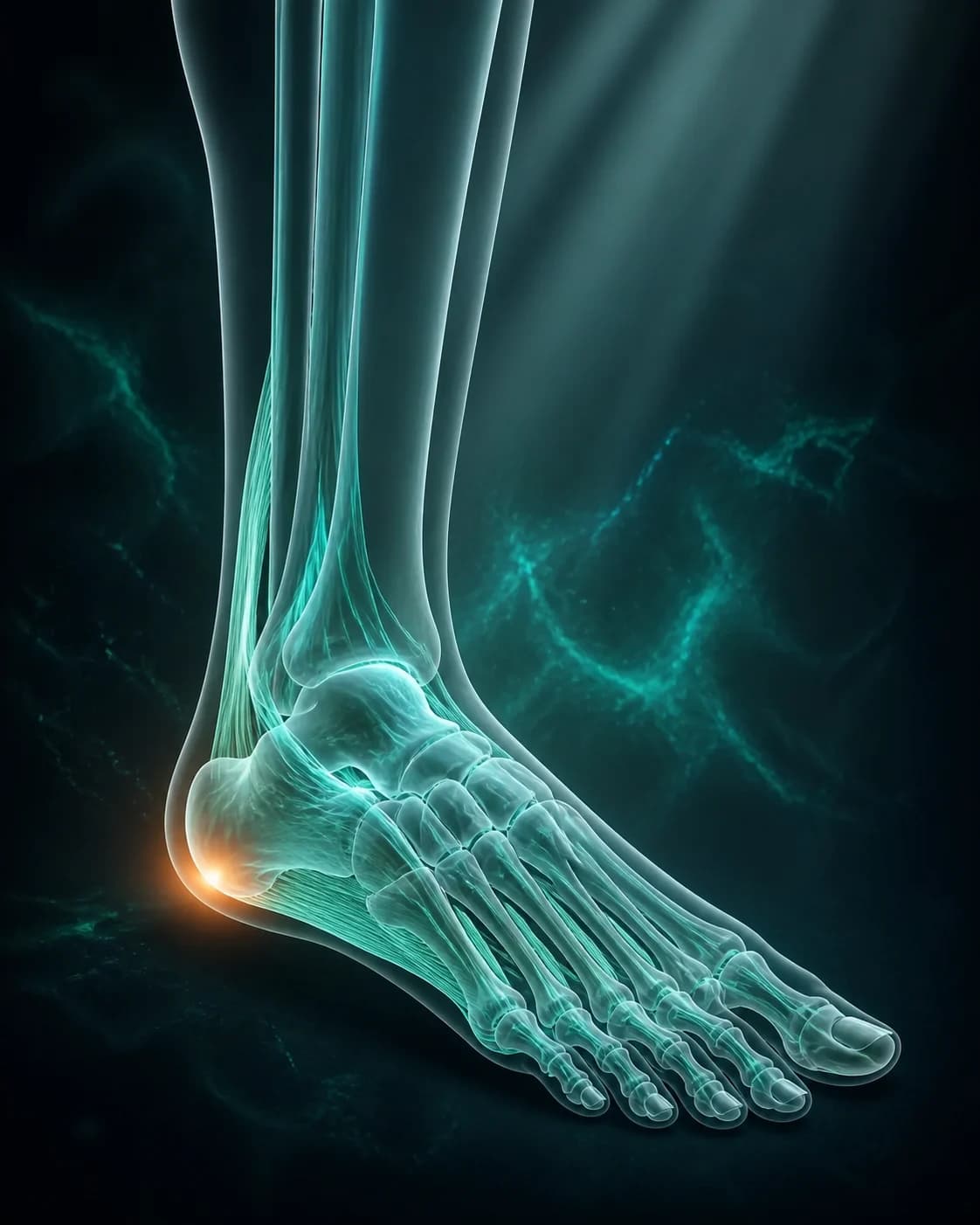
Translucent anatomical illustration of the ankle, heel, arch, and foot

Foot, heel & ankle

17 guides

Sprains, instability, heel and arch pain, tendon overload, and forefoot symptoms.
Ankle PainAnkle pain can involve ligaments, tendons, joints, cartilage, bone, or nerves.Ankle SprainAn ankle sprain stretches or tears ligaments, most often on the outside of the ankle after a roll.Chronic Ankle InstabilityChronic ankle instability is repeated giving way or lack of confidence after one or more sprains.Ankle ImpingementAnkle impingement causes pinching pain at the front or back of the ankle during deep bend or pointed-toe positions.Plantar FasciitisPlantar fasciitis is load-related pain where the plantar fascia meets the heel.Heel PainHeel pain may come from the plantar fascia, fat pad, Achilles insertion, nerve, bone stress, or growth plate.Achilles TendinopathyAchilles tendinopathy is load-related pain in the tendon between the calf and heel.Achilles Rupture RehabilitationAn Achilles rupture is a complete tendon tear managed surgically or nonsurgically.Posterior Tibial Tendon DysfunctionThe posterior tibial tendon supports the arch and controls the foot during walking.Peroneal TendinopathyPeroneal tendinopathy causes pain along tendons behind the outer ankle.Tarsal Tunnel SyndromeTarsal tunnel syndrome is compression or irritation of the tibial nerve near the inner ankle.Turf ToeTurf toe is a sprain of the big-toe joint after the toe is forced upward.MetatarsalgiaMetatarsalgia is pain under the ball of the foot rather than one specific diagnosis.Morton's NeuromaMorton's neuroma is irritation and thickening around a nerve between the forefoot bones, most often between the third and fourth toes.Bunion & Big-Toe Joint PainA bunion is a change in big-toe alignment with prominence at the inner forefoot.Cuboid SyndromeCuboid syndrome describes pain around the outer midfoot associated with irritation of the cuboid region.Flat FeetFlat feet describe a lower arch in standing and may be painless.
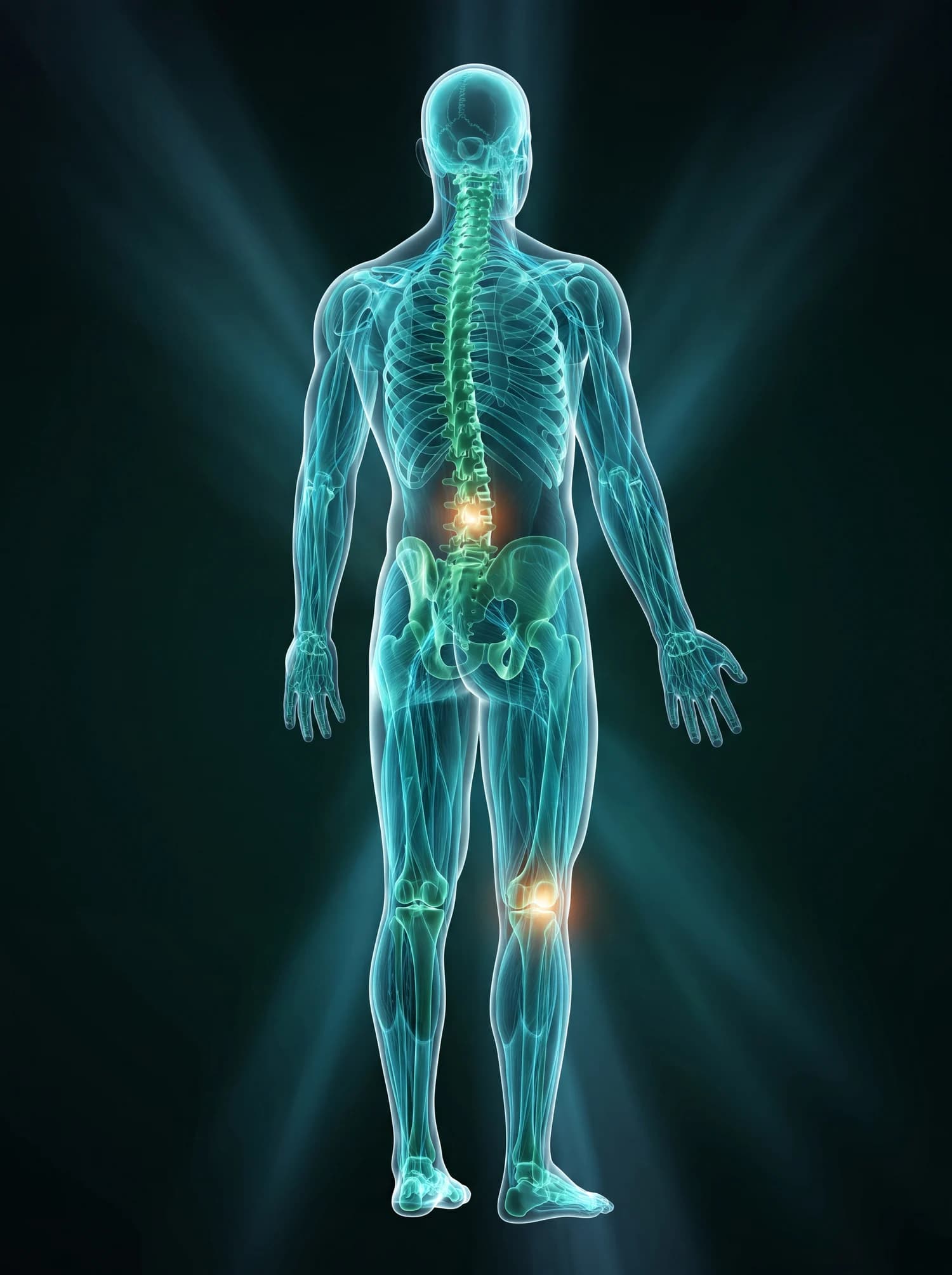
Full-body anatomical figure used to map musculoskeletal symptoms

Whole-body, sport & recovery

15 guides

Overuse, arthritis, postsurgical recovery, balance, gait, and return-to-sport planning.

Sports InjuriesSports injuries include acute sprains, strains, impact injuries, and gradual overload problems.Overuse InjuriesOveruse injuries develop when repeated load outpaces recovery and adaptation.Repetitive Strain InjuryRepetitive strain injury is an umbrella term for symptoms linked to repeated work, tool, computer, music, or sport tasks.ArthritisArthritis is joint inflammation or degeneration with many possible causes.OsteoarthritisOsteoarthritis is change in joint cartilage, bone, and surrounding tissues that can cause pain and stiffness.Chronic Musculoskeletal PainChronic musculoskeletal pain lasts beyond expected tissue-healing time or recurs over months.Post-Surgical RehabilitationPost-surgical rehabilitation restores motion, strength, coordination, and function while respecting tissue-healing precautions.Return-to-Sport RehabilitationReturn-to-sport rehabilitation bridges the gap between being pain-free in the clinic and handling full practice or competition.Balance ProblemsBalance problems can arise from the inner ear, vision, sensation, strength, medication, neurologic disease, or musculoskeletal pain.Fall PreventionFall prevention combines strength, balance, gait, home and environmental review, vision, footwear, and medical factors.Gait DysfunctionGait dysfunction is a change in walking pattern, speed, symmetry, or safety.Work-Related Musculoskeletal InjuriesWork-related injuries may follow one lifting event or accumulate through repetition, force, vibration, awkward reach, or long static periods.Motor Vehicle Injury RehabilitationMotor vehicle collisions can produce neck, back, shoulder, headache, and concussion symptoms through rapid acceleration and impact.Physical DeconditioningPhysical deconditioning is loss of strength, endurance, mobility, and confidence after illness, injury, surgery, or inactivity.Hypermobility-Related PainHypermobility means joints move beyond typical ranges and may be painless or linked to instability, fatigue, and recurrent injury.

Still not seeing your wording?

The evaluation starts before the label.

The practice treats more than a page inventory can neatly name. If pain, stiffness, weakness, balance, or an injury is limiting you, the next step is an assessment, not a better search term.
Choose a clinic

Not sure what's causing your pain?

Book in Portsmouth or Alton. Your provider will start with the history, movement, and clinical findings that separate one pain pattern from another.

Portsmouth Clinic

Portsmouth, NH · Seacoast

Mon to Thu: 9:00 AM to 6:00 PMFriday: 9:00 AM to 5:00 PM
(603) 431-4200
Lakes Region Clinic

Alton, NH · Lakes Region

Mon, Wed, Fri: 9:00 AM to 7:00 PMTue & Thu: 9:00 AM to 6:30 PMSaturday: 8:00 AM to 12:00 PM
(603) 875-4000
Book Call