
Soft tissue
Trigger Point Dry Needling
A needling option for selected muscle pain and movement limits.
In plain language
What is dry needling and what is it not?
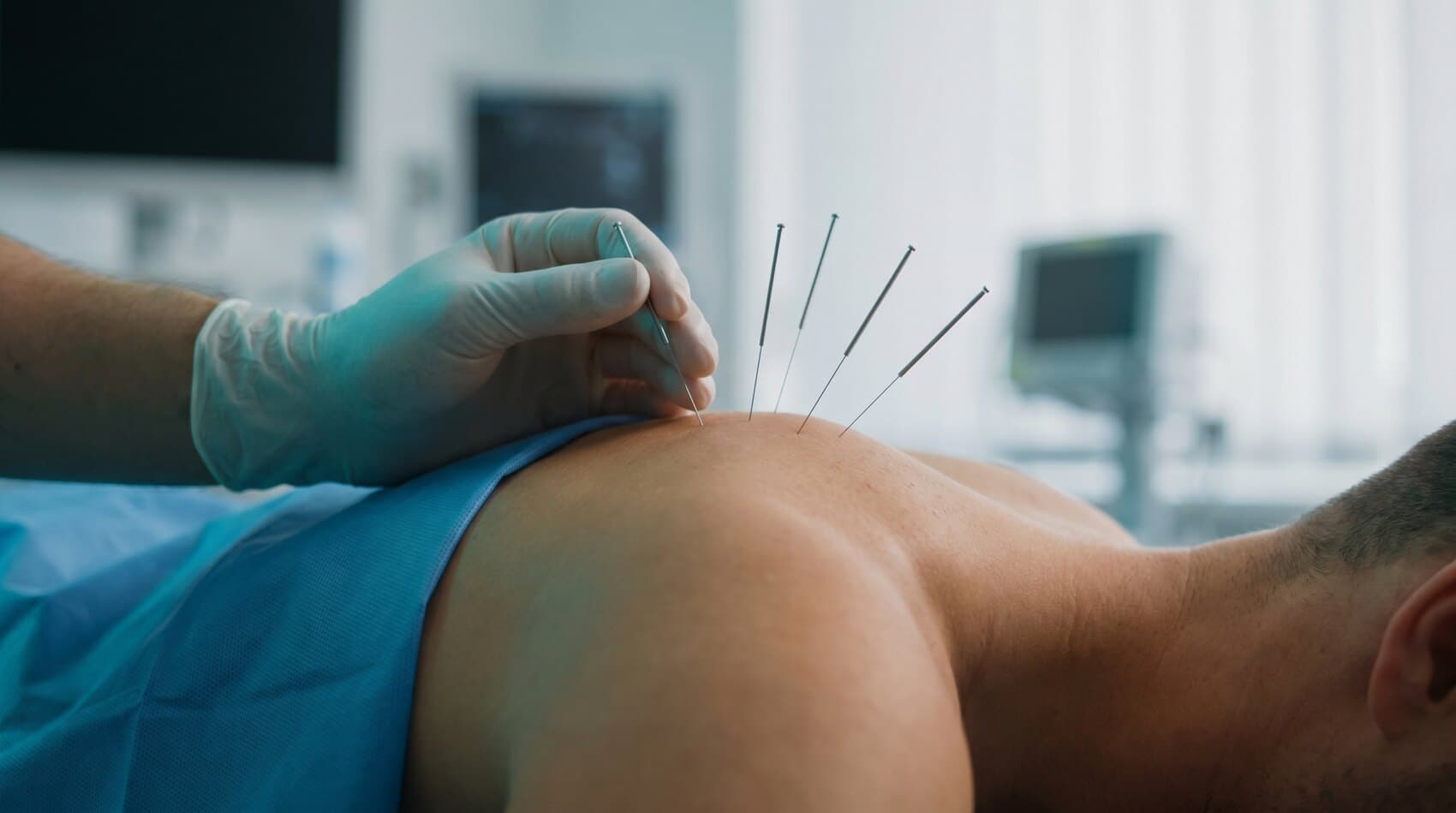
Dry needling uses a thin, solid filament needle inserted through the skin into a selected muscle or related tissue. No medication is injected. Clinicians may use it to change a sensitive trigger point, muscle tone, pain, or movement for a short period.
Dry needling is not acupuncture, although both use needles. The training framework and treatment rationale differ. At this clinic it is a musculoskeletal tool within a larger rehabilitation plan, not a stand-alone cure for all muscle pain.
Clinical fit
When might a clinician discuss dry needling?
The option may come up when a muscle reproduces a familiar symptom, movement is limited by guarding, or pain is preventing useful exercise. The provider should first screen the region and determine whether muscle sensitivity is central to the problem or simply a response to another injury.
Dry needling at this clinic is always something the patient specifically chooses. You will be told what is being targeted and what to expect, and you sign a consent form before any needle is opened. No one receives needles who did not ask for them.
The visit
What happens before, during, and after needling?
Consent is specific to the procedure. You should understand the target, expected sensation, alternatives, and relevant risks before a needle is opened.
Screen and consent
The clinician reviews medical history, medication, skin condition, anatomy, and alternatives, then answers questions.
Position and clean
The treatment area is positioned safely and prepared using clean technique with a sterile single-use needle.
Needle the selected target
The needle is placed according to training and anatomy. You may feel pressure, an ache, or a brief muscle response.
Retest movement
The clinician checks the original symptom or motion and follows with active work when appropriate.
Before you book
Questions about dry needling
Are the needles sterile?
A qualified clinician uses sterile, single-use needles and disposes of them in a sharps container after treatment.
What should I do after treatment?
Follow the activity and exercise guidance given for your condition. Mild soreness can occur, but new chest or breathing symptoms after trunk needling need urgent evaluation.
This page is educational and cannot determine whether dry needling is safe or appropriate for you. A provider reviews your history and examination findings first, and will tell you what to expect before any treatment begins.
Explore more care


Get treated with Dry Needling.
Call the clinic that's closest to you or request a time online. The team can help you check plan-specific referral and insurance requirements.
Already a chiropractic patient? Schedule in the patient portal (opens in a new tab)
Portsmouth, NH · Seacoast
Alton, NH · Lakes Region