
Soft tissue
Active Release Technique (ART)
Movement-based soft-tissue treatment for selected restrictions.
In plain language
What happens during Active Release Technique?
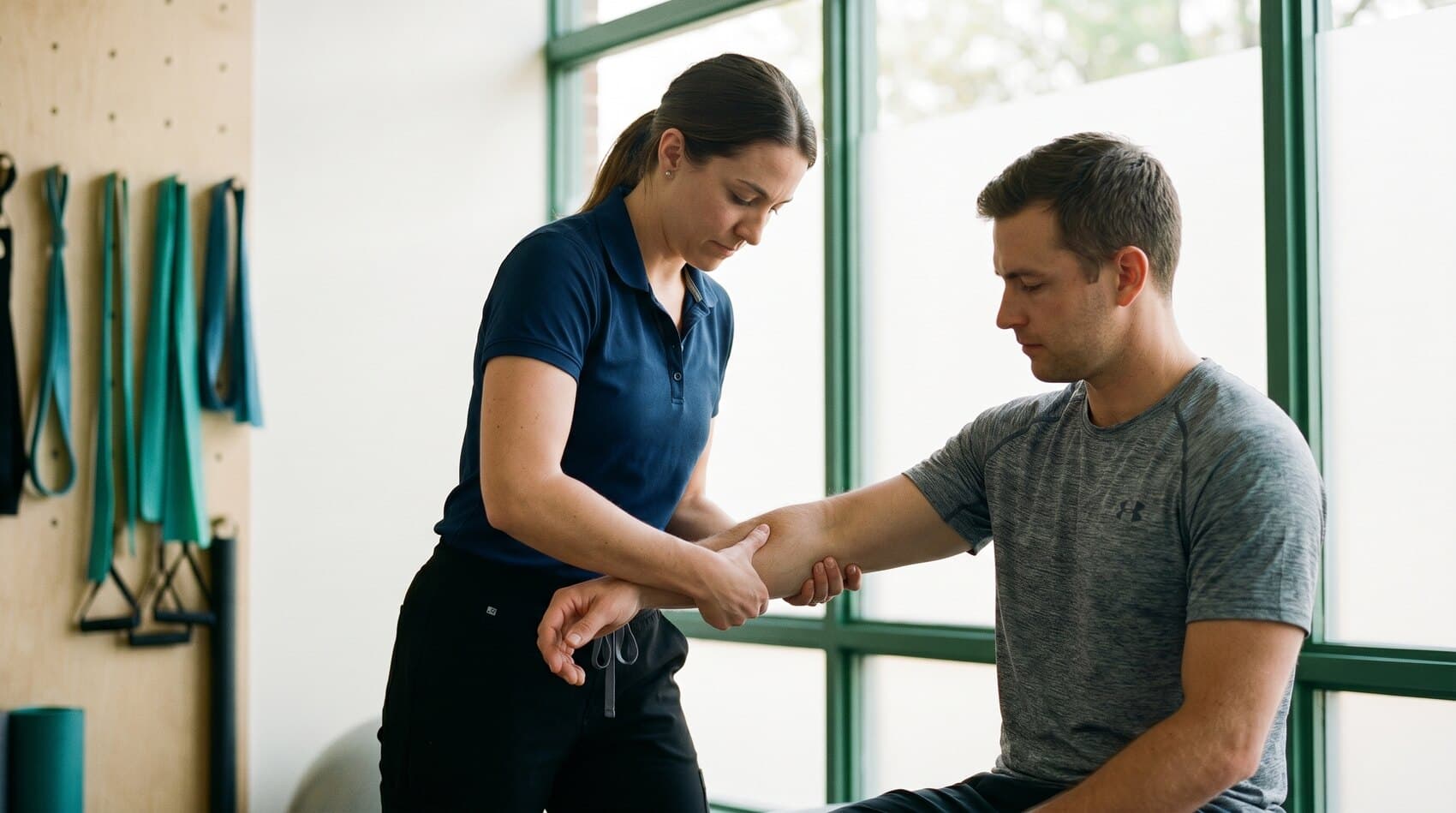
Active Release Technique, often called ART, is a branded form of hands-on soft-tissue treatment. The clinician contacts a selected muscle, tendon, fascia, or nearby tissue while the patient moves through a controlled range. The aim is to change pain, glide, or motion in a specific pattern, not to break up every area that feels tight.
The treatment makes the most sense when an examination has found a reproducible movement restriction or load-sensitive tissue. It is commonly used within a broader plan that includes activity adjustment and exercise. The response should be checked immediately against the movement that was limited.
Clinical fit
Which findings make soft-tissue treatment worth trying?
A provider may consider ART when symptoms are linked to a particular muscle or tendon load, when tissue glide appears limited, or when a movement improves after a brief manual test. Tenderness alone is not enough to establish a diagnosis because many healthy tissues can be tender under pressure.
Numbness, progressive weakness, major trauma, unexplained swelling, or pain that does not behave like a musculoskeletal problem changes the decision. Nerve symptoms need a neurologic screen before pressure is applied near a sensitive pathway.
Making the choice
Where does ART fit among other soft-tissue options?
ART may be chosen when movement paired with a specific contact gives the clinician useful information or produces a short-term change. A different manual technique may be more comfortable or just as effective for another person. The brand name does not make it clinically necessary.
The deciding question is what happens next. If the treatment improves motion, the visit should use that motion in strength or task practice. If it repeatedly creates soreness without improving function, continuing simply because the tissue feels tight would not be a sound reason.
The visit
How is ART used without turning it into a generic massage?
The technique is brief and targeted. It should connect to an examination finding and to the next active step in care.
Reproduce the limit
The clinician identifies the motion, load, or task that reliably brings on symptoms.
Select the tissue
Palpation and movement testing narrow the target instead of treating an entire body region indiscriminately.
Apply contact with movement
Pressure is paired with a controlled active or passive motion. You can ask for the pressure to be changed at any point.
Retest and load
The original movement is repeated. A useful change is reinforced with mobility, strength, or technique work.
Before you book
Questions about art
Is Active Release Technique the same as massage?
Both involve hands-on contact, but ART pairs a selected contact with a specific movement and is usually tied to a clinical retest.
How many ART sessions will I need?
There is no responsible preset number. Continued use should depend on a measurable response and progress toward your movement goal.
Can ART treat nerve symptoms?
Some nerve-related symptoms may respond when surrounding movement and tissue sensitivity are relevant, but numbness or weakness first requires a careful neurologic assessment.
This page is educational and cannot determine whether art is safe or appropriate for you. A provider reviews your history and examination findings first, and will tell you what to expect before any treatment begins.
Explore more care

Get treated with ART.
Call the clinic that's closest to you or request a time online. The team can help you check plan-specific referral and insurance requirements.
Already a chiropractic patient? Schedule in the patient portal (opens in a new tab)
Portsmouth, NH · Seacoast
Alton, NH · Lakes Region