
Soft tissue
Graston Technique
Instrument-assisted soft-tissue mobilization for stubborn restrictions.
In plain language
What is Graston Technique and what do the tools do?
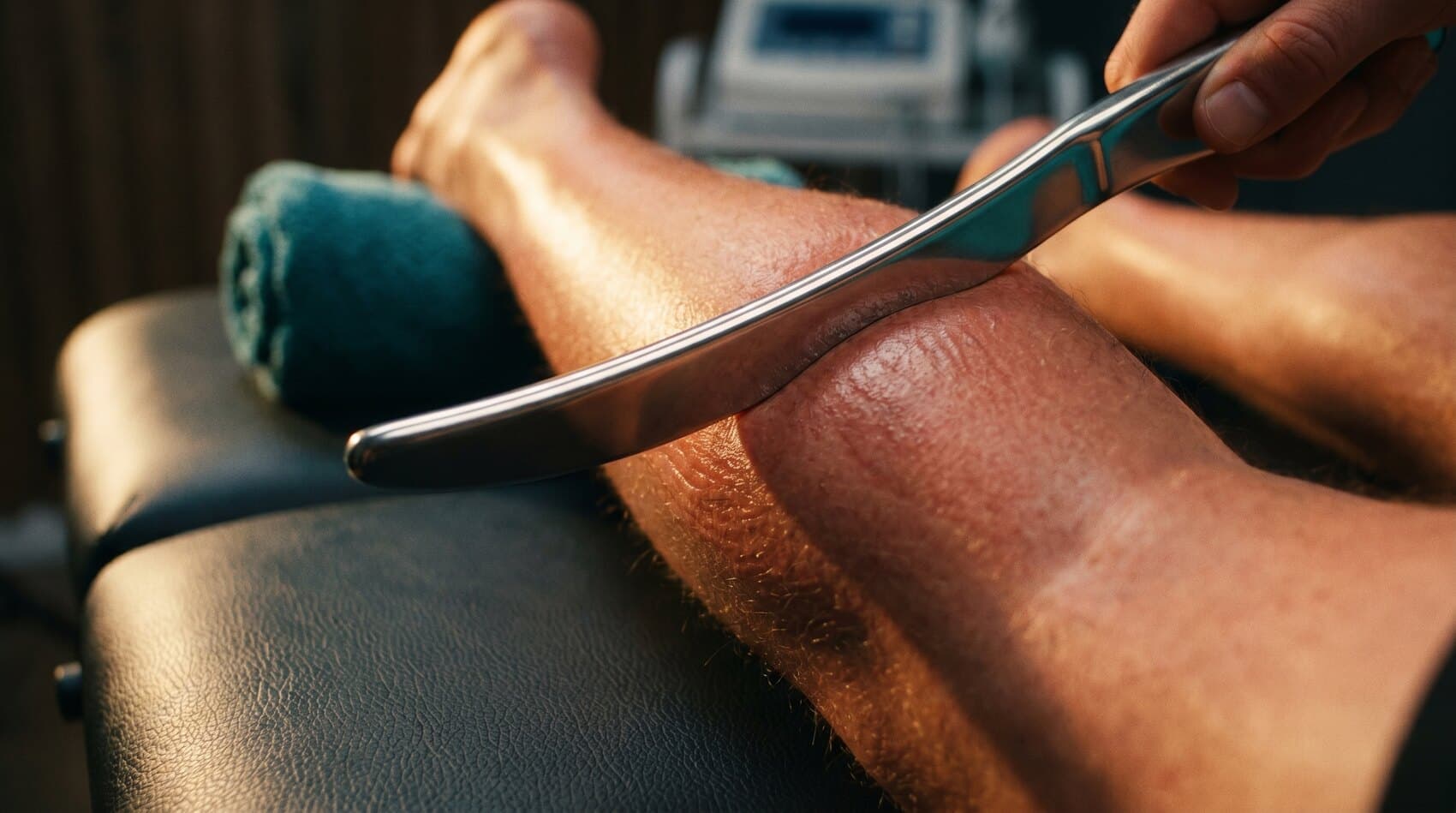
Graston Technique is a form of instrument-assisted soft-tissue mobilization, commonly shortened to IASTM. A trained clinician uses ergonomically designed instruments on the skin while controlling pressure, angle, and direction, in order to detect and treat fascial restriction, chronic inflammation, and areas of soft-tissue fibrosis or degeneration.
The instrument design lets the clinician localize a restriction quickly and treat it with the appropriate amount of pressure. Controlled micro-trauma stimulates a local inflammatory response that helps the tissue remodel. Graston Technique is then followed by specific therapeutic exercise to improve tissue loading and healing.
Clinical fit
When might instrument-assisted treatment be considered?
IASTM may be tried for a load-sensitive tendon, a motion restriction, or persistent soft-tissue discomfort when the examination suggests that a brief manual intervention could help exercise. The provider should identify the movement being retested before treatment begins.
It is not a default answer for all chronic pain. If symptoms are widespread, neurologic, vascular, or unrelated to movement, more scraping is unlikely to solve the underlying problem and may delay a better evaluation.
Making the choice
How should the tool change the treatment decision?
An instrument changes how pressure is delivered, not the need for clinical reasoning. The provider still needs to identify the likely tissue, consider healing stage, and agree on the marker that will be retested.
The visit
What should a measured Graston session look like?
Good use is selective, time-limited, and easy to reassess. The skin does not need to be heavily bruised for the treatment to have an effect.
Choose a functional marker
Range of motion, a squat, grip, calf raise, or another relevant task establishes the comparison.
Prepare the area
The clinician checks skin and contraindications, then uses a small amount of lubricant where appropriate.
Dose the contact
Pressure and duration are adjusted to comfort, tissue irritability, and the intended response.
Retest and exercise
The original marker is repeated, then active work uses any improvement while it is available.
Before you book
Questions about graston
Does Graston break up scar tissue?
The instruments are used to detect and treat fascial restriction and scar tissue, and the controlled micro-trauma helps the tissue remodel. The treatment is always paired with the exercise that reloads the area afterward.
Will Graston leave marks?
Some redness, tenderness, or bruising in the treated area is a normal and expected response to instrument work. Your provider will set the pressure to the tissue and tell you what to expect before starting.
What happens after the tool work?
The provider should retest the target movement and use exercise or task practice to build a result that carries beyond the session.
This page is educational and cannot determine whether graston is safe or appropriate for you. A provider reviews your history and examination findings first, and will tell you what to expect before any treatment begins.
Explore more care

Get treated with Graston.
Call the clinic that's closest to you or request a time online. The team can help you check plan-specific referral and insurance requirements.
Already a chiropractic patient? Schedule in the patient portal (opens in a new tab)
Portsmouth, NH · Seacoast
Alton, NH · Lakes Region