
Soft tissue
Myofascial Cupping Therapy
Controlled suction used to lift and decompress underlying tissue.
In plain language
What does myofascial cupping do?
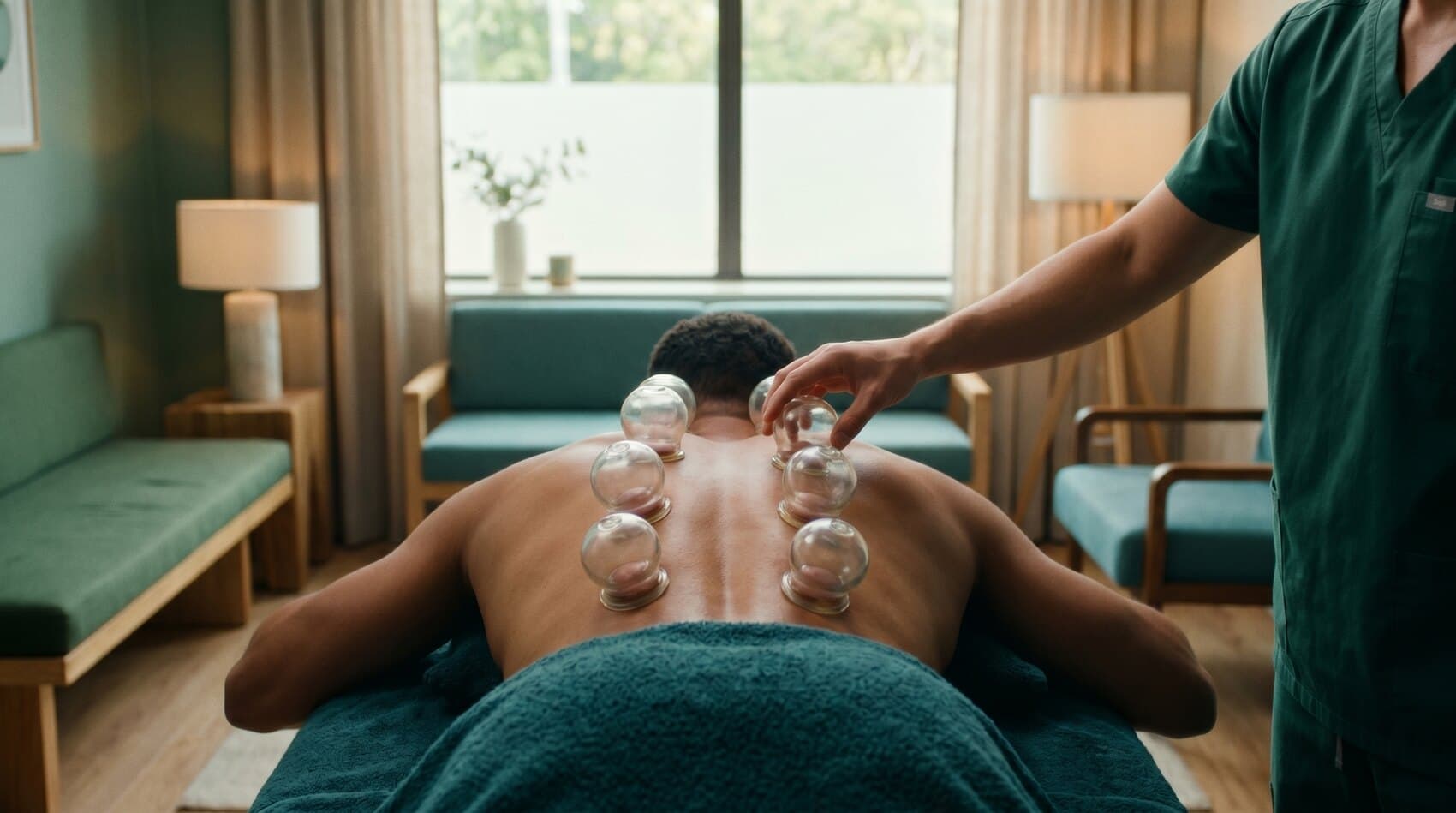
Myofascial cupping uses suction to lift tissue as the cup is moved by your provider, decompressing the tissue underneath. It is widely used in athletic training, physical therapy, and sports injury clinics, and has been used at the Olympic Games for pre- and post-workout recovery.
Two techniques are most common. Stationary cupping places one or several cups in the treatment zone for five to ten minutes. Gliding cupping applies a topical ointment or liniment first, then moves the cups gently across the skin along fascial and muscle planes. Cumulative treatment supports circulation, lymphatic drainage, and muscle endurance, helping the body recover from training and strenuous activity.
Clinical fit
When may cupping be tried as an adjunct?
A provider may discuss cupping when superficial pressure is better tolerated than compression, when a person reports short-term relief from it, or when it helps a limited movement feel easier. A clear movement or symptom marker makes the response easier to judge.
It should not distract from diagnosis. Unexplained swelling, suspected blood clot, infection, acute fracture, neurologic loss, or pain unrelated to movement requires another evaluation path.
Making the choice
How can cupping be used without an unsupported story?
Cupping does not need a detoxification or fascia-breaking explanation to be evaluated fairly. It can be treated as a sensory intervention that some people find comfortable and others do not. The outcome can be checked against movement, pain during a task, or willingness to exercise.
The visit
What should a careful cupping session include?
Cupping is applied to intact skin for a limited time. Pressure, placement, and movement are adjusted to the region and your tolerance.
Check the skin and history
The provider screens for infection, fragile skin, bleeding risk, sensation loss, and other reasons to modify treatment.
Set a comparison
A painful or restricted movement is recorded before the cups are applied.
Use controlled suction
The cup is placed or moved without chasing the darkest possible mark. You should report pinching, burning, or excessive discomfort.
Retest and move
The original marker is checked, then exercise or mobility work uses any short-term improvement.
Before you book
Questions about cupping
What are the round marks after cupping?
They come from the suction acting on skin and the small blood vessels beneath it. Your provider will tell you what to expect for the pressure and technique being used.
How long do the marks last?
They often fade over several days, but timing varies with pressure, skin, medication, and individual response.
Can I choose another treatment?
Yes. Cupping is optional, and the provider can discuss manual or active alternatives that target the same goal.
This page is educational and cannot determine whether cupping is safe or appropriate for you. A provider reviews your history and examination findings first, and will tell you what to expect before any treatment begins.
Explore more care

Get treated with Cupping.
Call the clinic that's closest to you or request a time online. The team can help you check plan-specific referral and insurance requirements.
Already a chiropractic patient? Schedule in the patient portal (opens in a new tab)
Portsmouth, NH · Seacoast
Alton, NH · Lakes Region