
Support
Kinesiology Taping
Elastic tape for temporary movement feedback and support.
In plain language
What can kinesiology tape realistically provide?
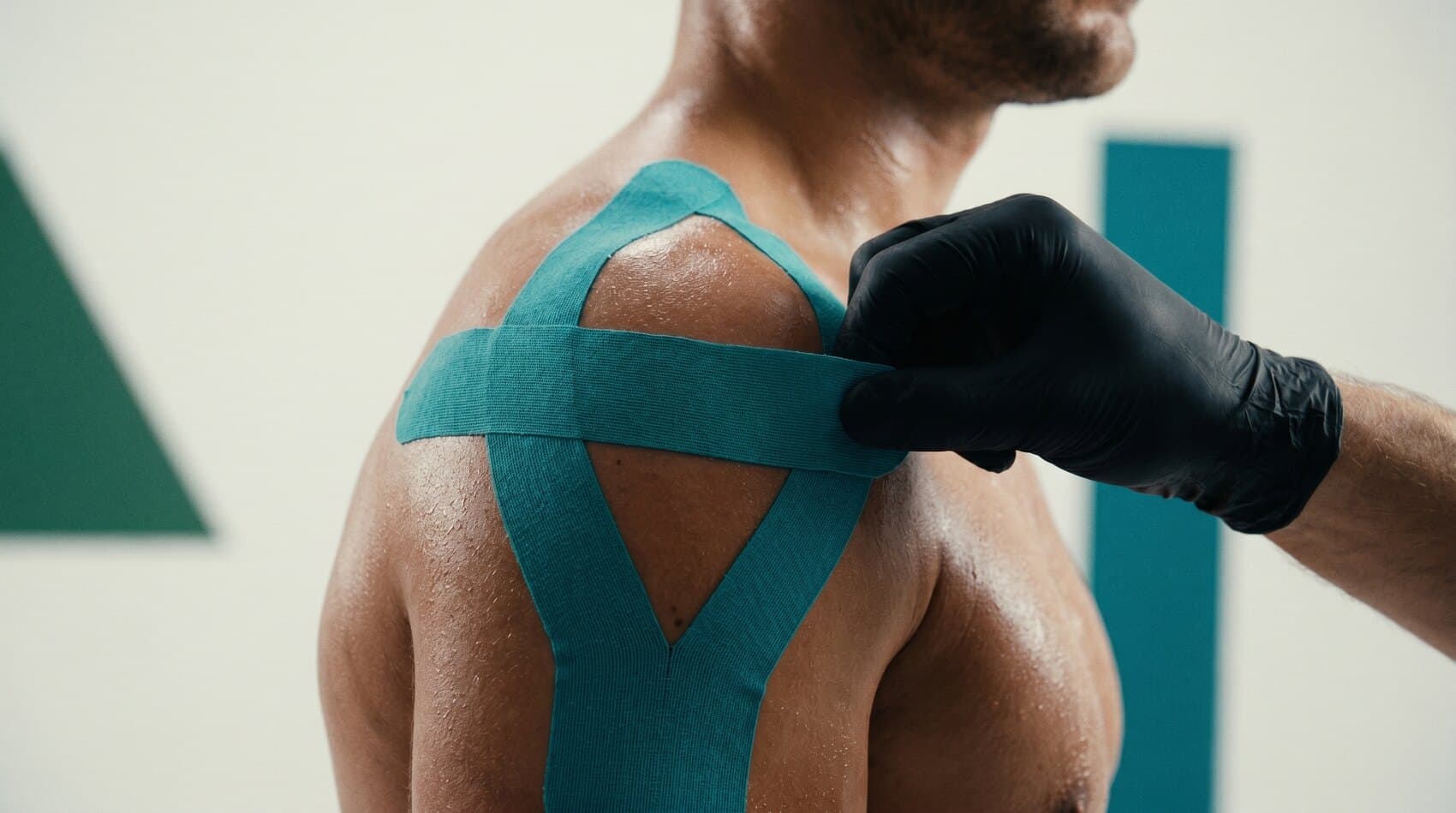
Kinesiology tape is an elastic adhesive tape applied to the skin while allowing movement. Depending on placement and tension, clinicians may use it as a reminder for movement, a temporary support, or part of swelling management.
The tape does not permanently realign a joint or replace the strength of muscle, tendon, or ligament. Its value is practical and short term: if it makes a useful task more comfortable or gives a person clearer feedback while they build capacity, it may earn a place in the plan.
Clinical fit
How do we decide whether taping is worth using?
Taping is most useful when there is a defined target such as comfort during a step-down, feedback for shoulder position, or support during a gradual return to activity. The task should be tested before and after application so preference is separated from a measurable change.
Skin condition matters. Tape should not cover an open wound, active rash, infection, or an area where sensation is too limited to notice irritation. A history of adhesive allergy calls for another option or a cautious test patch.
Making the choice
When does tape help a plan and when is it just decoration?
Tape is most defensible when the same task feels or performs differently after application. That comparison can be simple: a step, reach, run, or repeated work motion. If nothing relevant changes, a complex pattern or another color does not create a clinical reason to keep using it.
Temporary support can still be valuable during a graded return, especially when it increases confidence without restricting needed motion. The plan should explain how the patient will rely less on tape as strength, tolerance, or control improves.
The visit
What goes into a safe tape application?
The clinician chooses the tape pattern around a specific movement goal and explains how long to wear it and when to remove it.
Test the task
A movement or symptom is recorded so the application has a purpose beyond appearance.
Inspect and prepare skin
The area should be clean, dry, and free from broken or irritated skin.
Apply modest tension
Placement and stretch are selected for the intended feedback or support rather than maximum tightness.
Teach removal
You receive instructions for wear time, showering, skin checks, and gentle removal to reduce irritation.
Before you book
Questions about kt taping
Can I exercise while wearing kinesiology tape?
Often yes, if the application is comfortable and your condition allows the activity. Follow the specific loading guidance from your provider.
How long should tape stay on?
Wear time depends on the application and your skin. Remove it sooner if irritation begins, and follow the instructions given at the visit.
Does tape stabilize a torn ligament?
Elastic tape provides limited support and feedback. It does not replace bracing, protection, or medical care when a significant injury requires them.
This page is educational and cannot determine whether kt taping is safe or appropriate for you. A provider reviews your history and examination findings first, and will tell you what to expect before any treatment begins.
Explore more care


Get treated with KT Taping.
Call the clinic that's closest to you or request a time online. The team can help you check plan-specific referral and insurance requirements.
Already a chiropractic patient? Schedule in the patient portal (opens in a new tab)
Portsmouth, NH · Seacoast
Alton, NH · Lakes Region